The Depth Behind the Tape: Judging UK ETF Liquidity Before You Trade
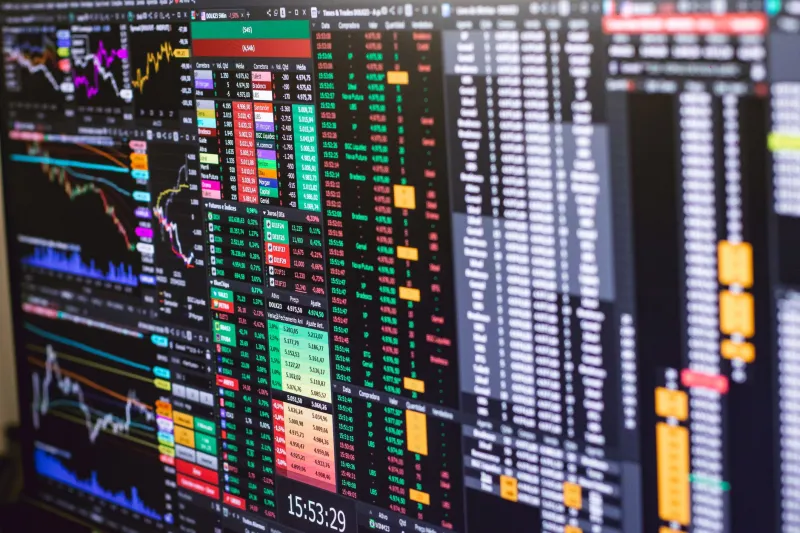
An exchange-traded fund listed in London can appear reassuringly liquid. The screen shows daily turnover, a narrow quoted spread and a price that updates throughout the session. For a modest purchase, that presentation is often accurate. For a larger order, it can be a misleading summary of what the market will actually absorb. Liquidity in UK-listed ETFs is not a single number printed beside a ticker. It is a set of conditional arrangements involving displayed quotes, market makers, the underlying portfolio and the creation and redemption process.
What the tape records, and what it leaves out
On-screen volume is a record of executions on the exchange. It is not a complete account of the liquidity available to a buyer or seller. Much ETF trading in London takes place in a quote-driven environment, where market makers stand ready to buy and sell and manage their inventories against the fund's underlying assets. A sizable trade may be arranged away from the central order book or executed in a package that the tape does not present as a simple pool of waiting buyers and sellers.
This cuts both ways. A low daily volume figure does not automatically mean an ETF is difficult to exit. A fund holding large, liquid constituents may support trading far beyond its recent on-exchange turnover because market makers can hedge in the underlying market. Equally, a high volume figure does not guarantee depth. Turnover can be concentrated in a few trades, inflated by short-term flows, or flattered by activity around a rebalance. The number tells a UK investor something about recent activity, but not everything about the price of immediacy.
A quote is a price for a size
The quoted spread is another useful but incomplete signal. The touch, meaning the best displayed bid and offer, may represent only a modest size. An investor checking a platform screen before buying £5,000 of an ETF may see one picture. An investor seeking to sell £250,000 may see another once the market maker is asked to commit capital. Spreads can widen as order size increases, as inventory becomes harder to hedge, or as the underlying market becomes more volatile.
This is especially relevant in the opening and closing auctions, around major economic data and during periods of sterling or global market stress. A tight spread at midday is not a promise of the same spread at 8am on a Monday. For UK buyers, the practical lesson is to distinguish between the price shown for a small indicative trade and the price available for the size actually contemplated. Limit orders are not a bureaucratic detail. They are the means by which an investor states the maximum spread that is acceptable.
The basket sets the ceiling
An ETF cannot be more liquid, in any durable sense, than the assets it holds and the mechanism that connects the fund to its underlying market. A fund tracking the largest UK equities may have deep secondary capacity because its constituents trade in volume and market makers can hedge efficiently. A specialist ETF holding emerging market bonds, small-cap shares or narrow thematic exposures faces a different constraint. Its London listing may look orderly while the underlying basket is thinner, subject to wider dealing costs or trading in a time zone that does not overlap fully with London hours.
The creation and redemption mechanism is central. Authorised participants can create new ETF shares when demand pushes the price above net asset value, and redeem shares when it falls below. That arbitrage helps keep the listed price close to the value of the portfolio. But it depends on the willingness and ability of those participants to act. In stressed markets, hedging costs rise, underlying liquidity can deteriorate and the arbitrage can become less dependable. The result is a wider premium or discount to net asset value, and a wider spread for anyone trying to trade.
A pre-trade checklist for UK investors
Before assuming an ETF is easy to exit, a UK buyer should look beyond the headline turnover figure. The following checks are not a guarantee of liquidity, but they frame the question more honestly.
- Compare average daily volume with median trade size and the number of trades. A high total concentrated in a few large prints is not the same as broad two-way activity.
- Inspect the quoted spread at the size you intend to trade, not only the touch. If the platform shows only a small quoted size, treat the displayed price as a starting point.
- Check the premium or discount to indicative net asset value. A persistent gap can signal stress in the creation and redemption process or a mismatch between trading hours.
- Identify the largest holdings and the markets in which they trade. An ETF holding liquid FTSE 100 names is not comparable with one holding illiquid local-currency bonds.
- Note the trading currency and the underlying currency exposure. Sterling weakness or strength can alter the economics of a trade even when the London quote looks stable.
- Use limit orders and avoid market orders in the opening or closing minutes. For larger sizes, consider splitting the order or asking the platform about request-for-quote arrangements.
- Stress-test the exit. If the spread doubled and the premium or discount moved against you, would the position still meet your portfolio's liquidity needs?
The exit is a process, not a promise
For most long-term UK investors, an ETF is a portfolio holding rather than a short-term trading instrument. That makes liquidity a secondary consideration most of the time. But it becomes primary when a holding is large relative to the fund's typical activity, when the underlying market is strained, or when the investor needs cash at short notice. The screen can answer a simple question about recent trading. It cannot answer the more important question: at what price, and in what size, will the market actually transact?
Treating headline volume as a proxy for exit certainty is the error. Liquidity is conditional, and in UK-listed ETFs it is shaped by the interaction of the quoted market, the underlying basket and the arbitrage mechanism. A disciplined buyer checks all three before assuming that a visible price is a reliable promise.