The Illiquidity Discount: What AIM Investors Pay Before the First Trade

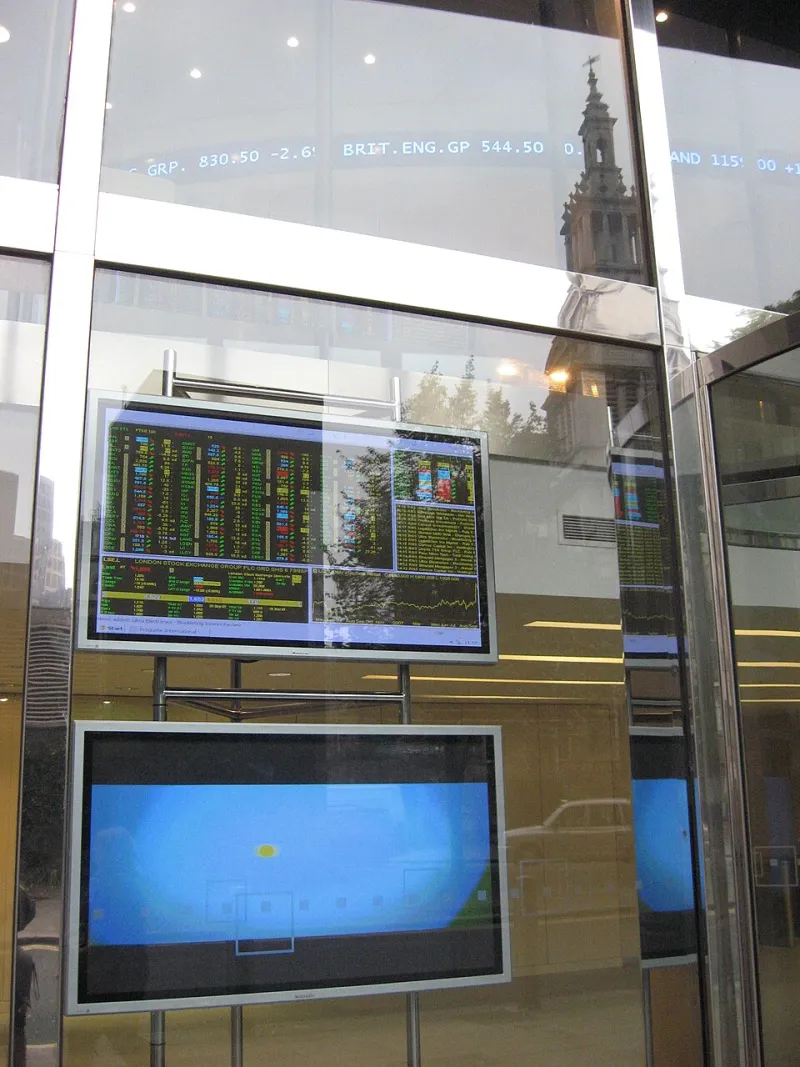
Photo: Foreign and Commonwealth Office, OGL v1.0, via Wikimedia Commons
AIM has long been the London market's home for smaller growth companies, and it remains a destination for UK investors willing to look beyond the FTSE indices. The appeal is understandable: earlier-stage businesses, tax wrappers that can hold AIM shares, and the possibility of finding a company before it becomes better known. Less appealing is the liquidity gap. Many AIM stocks trade in modest volumes, with wide spreads and limited depth. Those features are not incidental. They are a cost of ownership that investors should measure before they buy.
The spread is a cost you pay twice
Every quoted market has a bid and an offer. For a liquid FTSE 100 stock, the gap between the two may be a few basis points. For a thinly traded AIM company, it can be several percentage points. If the bid is 95p and the offer is 100p, an investor buying at 100p and immediately selling at 95p would lose 5% before any commission. That is the immediate mark-to-market cost of the spread, and it is paid on entry and again on exit.
Wide spreads are not a sign of bad faith by market makers. They reflect uncertainty, low turnover and the risk of holding inventory that may be difficult to shift. For investors, the practical implication is that the entry price shown on a screen is not the true cost of building a position. A £10,000 purchase in a stock with a 4% spread carries an implicit cost of roughly £400 relative to the mid-price, before dealing fees. On a £50,000 position, the same spread implies a much larger hurdle before the investment breaks even.
Beyond the spread: market impact and time
Spread is only the visible layer. The second cost is market impact. If a company's shares trade £30,000 a day and an investor tries to buy £15,000 in one order, that order represents half a day's typical turnover. A market maker may fill it, but only by widening the price or by taking time to source stock. Selling can be harder. In a falling market, buyers become scarcer, spreads widen and the price needed to attract liquidity falls.
This is why exit risk deserves as much attention as entry price. A holding that looks liquid on a quiet day may become difficult to sell after a profit warning, a financing announcement or a broader market sell-off. Investors who need to raise cash quickly may find that the only available bid is well below the last traded price. For a long-term investor with no immediate need to sell, that may be tolerable. For anyone who may need the money within a few years, it is a material risk.
Why AIM is structurally different
AIM is not a single homogeneous market. It contains larger, relatively liquid companies alongside very small businesses with narrow free floats and limited research coverage. The FTSE AIM All-Share index includes many constituents that trade intermittently. Some shares may go days without a meaningful trade. Others are dominated by a small number of institutional or retail holders, which can make the order book thin in both directions.
Nomination by a nominated adviser and the presence of market makers do not guarantee liquidity. They provide a framework for admission and trading, not a deep secondary market. Investors should therefore look beyond the market capitalisation to the free float, the shareholder register and the typical daily traded value. A company with a £100m market cap but a 20% free float and £20,000 average daily turnover is a different proposition from a similarly sized company with a broad shareholder base and active market making.
Position sizing: the first line of defence
For illiquid small caps, position sizing is more important than stock selection for controlling damage. A common approach is to limit an individual AIM holding to a small percentage of the portfolio, but the better test is days-to-liquidate. Estimate how many days of average daily volume your position represents. If a £20,000 holding equates to two days of typical trading, a forced sale could take time and move the price. If it equates to ten days, the exit risk is significantly higher.
Investors should also scale in and out. Building a position in tranches, using limit orders rather than market orders, and avoiding trades at the open or close can reduce impact. The same applies on exit. A limit order may not fill immediately, but it avoids accepting an unreasonably wide spread. For very thin stocks, patience is part of the cost calculation.
Using investment trusts and funds to dilute the problem
Collective vehicles can be a practical way to gain exposure to UK smaller companies without taking direct liquidity risk in a single illiquid stock. Investment trusts spread holdings across a portfolio, employ professional managers and can hold cash to meet redemptions or take advantage of opportunities. Their own shares trade on an exchange, so investors should also consider the trust's discount or premium to net asset value and its own liquidity.
This does not eliminate the underlying issue. A smaller companies trust still holds illiquid assets, and in stressed markets its discount can widen. But for many UK investors, a diversified vehicle is a more sensible starting point than building a concentrated position in a stock that trades by appointment. Venture capital trusts and similar structures may offer exposure to earlier-stage companies, but they carry their own risks, tax rules and liquidity constraints.
What to check before buying a thinly traded UK small cap
Before investing, review the following:
- Average daily traded value over at least three months, not just the last few sessions.
- Typical bid-offer spread and the depth of quotes available.
- Free float and concentration of major shareholders.
- Trading frequency and whether the stock regularly trades at all.
- Cash runway, funding history and the risk of a discounted placing.
- Upcoming results, capital markets days and other news events.
- Broker research coverage and the quality of regulatory disclosures.
- The likely exit route: takeover, secondary market sale or long-term hold.
Pricing the exit before the entry
AIM can offer genuine growth opportunities, but liquidity is a cost that must be priced alongside valuation and business risk. Investors should assume that the spread, market impact and time to exit will reduce returns, and size positions accordingly. The most successful small-cap investors are often not those who find the most exciting story, but those who recognise that owning an illiquid asset is only worthwhile when the potential return compensates for the difficulty of getting out.