The Dividend Does Not Arrive Alone: A UK Income Investor’s Ex-Date Audit

Photo: UK dividend investing paperwork calculator pound coins stock market screen London financial district, via facts.net
Dividend income is often discussed as if it were a separate stream from capital. In practice, a UK-listed share trades as one asset: the right to future cash flows, including the next dividend. The ex-dividend date does not create value; it marks the point at which the buyer stops acquiring the right to that particular payment. For investors tempted to buy a stock just before the ex-date to capture the payout, the relevant question is not whether the dividend will be paid, but whether the total cash received, after price adjustment and dealing costs, exceeds the cash committed.
Three dates, one register
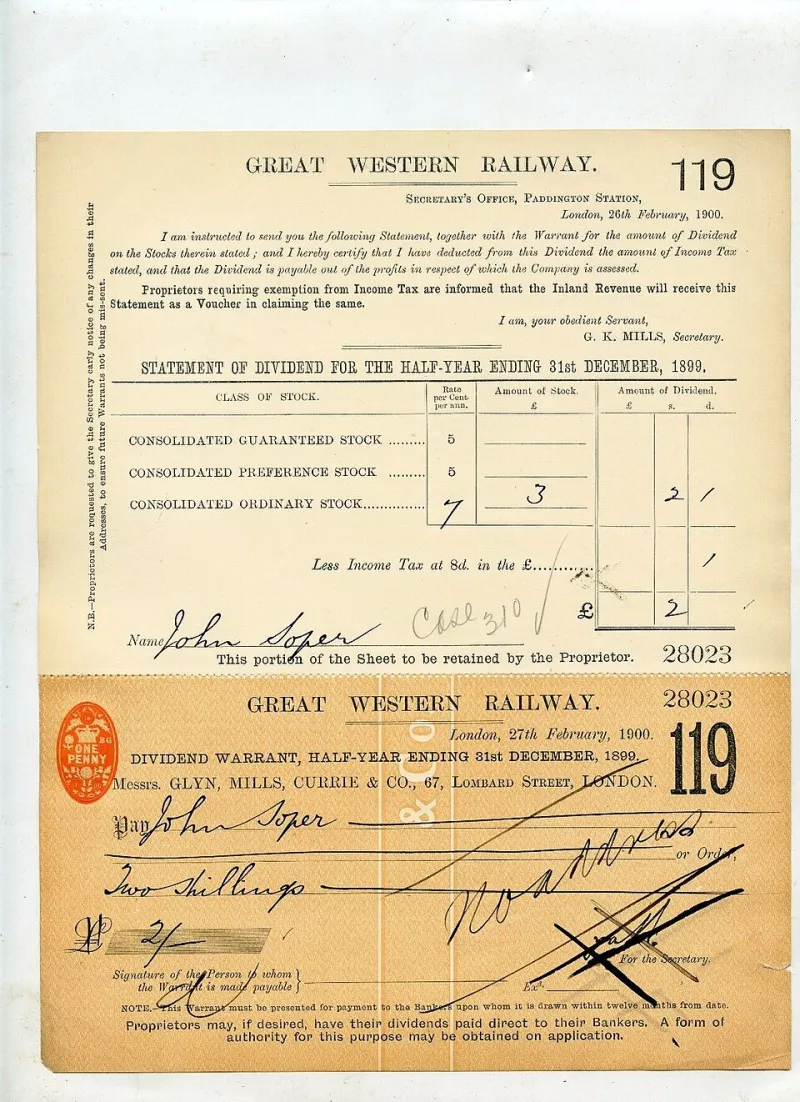
The declaration sets the amount and timetable. The record date is the date on which the company inspects its register to decide who is entitled. The ex-dividend date is the first trading day on which a buyer is no longer entitled to the declared dividend. The payment date follows later.
Entitlement is a matter of settlement, not intention. Under a T+1 settlement cycle, a purchase executed on the last cum-dividend day settles on the record date and therefore appears on the register in time. A purchase executed on the ex-dividend date settles the following business day, after the register has been struck, so the buyer receives nothing. The window is narrow: in a simple T+1 example, if the record date is Friday, the last cum-dividend trade is Thursday and Friday is ex-dividend. Under the T+2 cycle UK equities used historically, the last cum-dividend day falls earlier, but the principle is the same.
That distinction matters because many private investors follow the bargain date shown on their platform rather than the settlement date. A trade executed late in the day, or one affected by a platform cut-off, can settle after the record date even though the investor believed the purchase was timely. The company’s register, not the investor’s intention, decides the payment.
Why the price moves by roughly the dividend
On the ex-date, the market adjusts the share price to reflect that the buyer no longer gets the dividend. The adjustment is usually close to the dividend amount, though not exact: wider market moves, news and liquidity can dominate on the day. The economic point is that the dividend is a distribution of company value. Before the ex-date, the share embodies the right to the payment; after it, the payment has left the share and will arrive as cash. For a holder, total return at that instant is broadly unchanged before tax and costs. For a buyer arriving just before the ex-date, the payment is not a windfall; it is a return of part of the purchase price, with frictions attached.
This is the central flaw in buying a UK stock solely for its next payout. The investor is not capturing an extra return. They are converting capital into income, and doing so through a transaction that carries stamp duty, a bid-offer spread and platform charges.
A worked example: 1,000 shares at 500p
Assume a UK company’s shares trade at a mid-price of 500p cum-dividend and declare a 20p dividend. The quote is 498p bid to 502p offer. An investor buys 1,000 shares at 502p, a consideration of £5,020. Stamp duty or SDRT at 0.5% adds £25.10, and the platform charges £8, so the total outlay is £5,053.10. The purchase is made on the last cum-dividend day and settles on the record date, so the investor is entitled to £200.
On the ex-date the mid-price adjusts to about 480p. If the investor sells at the 478p bid and pays another £8 commission, proceeds are £4,780 less £8, or £4,772. Add the £200 dividend and total cash returned is £4,972. Against an outlay of £5,053.10, the result is a loss of £81.10 before any dividend tax. The apparent 4% yield on the 500p cum-price has not survived the round trip.
Tax can make the outcome worse. If the investor has already used the £500 dividend allowance and pays dividend tax at 33.75%, the £200 dividend carries £67.50 of tax, widening the loss to £148.60. A basic-rate taxpayer outside the allowance would pay £17.50, leaving a loss of £98.60. The capital loss may be allowable for capital gains tax purposes, but it does not cancel the dividend tax; the two taxes operate separately.
The costs that decide the outcome
The example is deliberately simple, but the frictions are real. Stamp duty or SDRT at 0.5% applies to most purchases of UK shares, and it is charged on the consideration rather than on the net dividend. The bid-offer spread is a cost both on entry and on exit, and it is often wider in smaller companies and investment trusts than in large-cap equities. Platform commission, dealing charges and any foreign exchange conversion can add further drag. Timing also has a cost: the dividend is usually paid weeks after the record date, so the cash is not available for reinvestment immediately.
For income investors, the practical lesson is that the ex-date is an administrative event, not an arbitrage. It can be relevant for tax planning, for checking that a purchase will settle in time, and for understanding why a share price has moved. It is a poor reason to buy.
A more disciplined test of dividend sustainability
Rather than chasing the payment, UK income investors should judge whether the dividend is supported by the business. Start with dividend cover: earnings per share divided by dividend per share. A cover ratio below 1.5 times leaves little room for error, while cyclical companies may need more. Free cash flow cover is often more revealing than accounting profit, because dividends are paid in cash. Check net debt relative to earnings, interest cover and the maturity profile of borrowings. A high yield can be a signal of risk rather than value.
Read the cash flow statement alongside the dividend note. Look at capital expenditure, working capital and buybacks. A company that is borrowing to pay dividends, or selling assets to fund them, is not offering a sustainable income stream. The track record through a full cycle matters more than one year’s payout. Sector context matters too: housebuilders, insurers, utilities and investment trusts have different capital rhythms, and a dividend that looks generous in one sector may be normal in another.
Finally, treat total return as the measure. A dividend reinvested, or spent, is part of the same return as capital growth. The objective is not to collect the largest possible payment on a chosen date; it is to own a diversified set of UK companies and funds whose cash generation can support distributions over time. The ex-dividend date will still appear on the calendar. It should not drive the decision.