The Hours London Sleeps: How Overnight Gaps Shape FTSE Returns

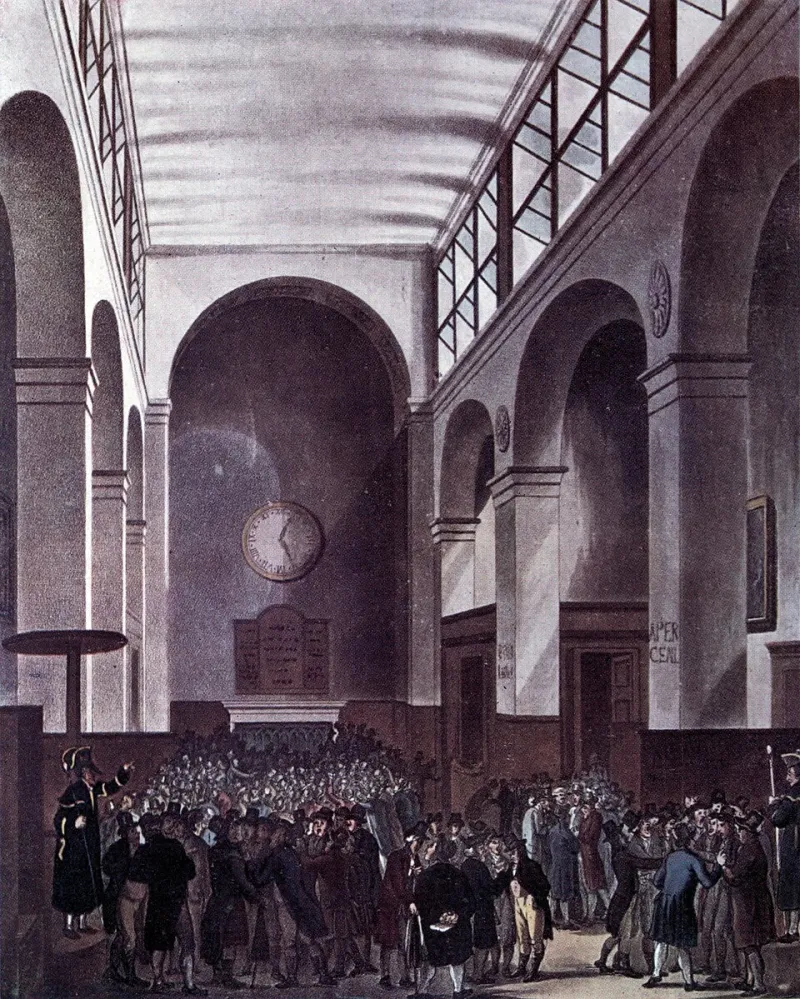
Photo: Rick Carn , CC BY-SA 2.0, via Wikimedia Commons
Most UK investors encounter the equity market at breakfast. The portfolio screen has already moved, the news has already broken, and the FTSE 100 has already printed an opening level. That ordinary experience conceals an important structural point: a large part of the return an investor receives is not earned during the London trading day at all. It accrues in the hours between the closing auction and the next opening auction, when the City is dark but the market is not idle.
What the overnight-intraday split actually measures
The decomposition is simple in principle. Take a daily close-to-close return and divide it into two components: the overnight return, from the previous close to the next open, and the intraday return, from the open to the close. Multiplied together, the two components reconstruct the full daily move:
(1 + overnight) × (1 + intraday) − 1 = close-to-close return
For the FTSE 100 and FTSE 250, the practical detail matters. The London closing auction sets the closing price, and the opening auction sets the opening price. The overnight window therefore includes the evening and early-morning sessions in New York and Asia, futures trading, currency moves, commodity prices, corporate announcements released outside London hours, and the order flow that accumulates in the opening auction. It is not a quiet interval. It is a period of continuous repricing, even if the primary London order book is closed.
A price index and a total-return index can also tell slightly different stories. Dividends and ex-dividend adjustments affect the levels, and an ex-date can create a mechanical gap that has nothing to do with overnight risk appetite. For that reason, a serious audit should use a consistent total-return series and treat ex-dividend dates separately rather than reading every opening gap as a signal about market sentiment.
Why London’s closed hours carry so much information
The FTSE 100 is not a purely domestic index. Its largest constituents earn substantial revenue overseas, and their shares respond to US trading, dollar moves and global sector news before London reopens. The FTSE 250 is more domestically oriented, but it is still exposed to UK-specific announcements, sterling, gilt yields and overseas risk appetite. In both cases, the opening auction is where dispersed overnight information is first concentrated into a single London price.
That has a consequence for how investors interpret ‘market hours’. The London Stock Exchange’s continuous trading session is a administrative window; the risk window is wider. An investor who holds UK equities overnight bears the P&L of that wider window whether or not they can trade in it. The market may be closed, but the exposure is not.
The execution question: when you trade is part of what you earn
Execution timing is not a back-office detail. If an investor places a market-on-open order, the executed price is the opening auction price, not the previous close. The order may fill at a level materially different from the price that was visible when the instruction was entered. A stop or stop-loss order triggered by the opening print can behave in the same way: the gap is the risk, not a temporary inconvenience.
Limit orders require a similar audit. A buy limit set below the previous close may fill at the opening auction if the stock gaps lower, which is favourable in price terms but may also signal that the market has repriced the shares for a reason. A limit set above the market may not fill at all if the opening gap runs away. The order type does not remove gap risk; it defines how that risk is expressed.
For investors who want London-hours exposure rather than overnight exposure, the alternative is to trade after the opening auction, once continuous trading has begun. That avoids the opening print but introduces the bid-offer spread and the possibility that the first few minutes are especially volatile. For investors who want the overnight component, holding through the close is unavoidable. There is no practical way to separate the return from the risk simply by choosing a convenient time of day.
Benchmarks and the pricing-point mismatch
Benchmark comparisons deserve the same scrutiny. An index return is usually struck at the closing auction, while a fund’s valuation point, an ETF’s market price and an investment trust’s closing price may occur at different times. A UK equity fund with a noon valuation point, a global fund with a US close and an ETF trading throughout the London day are not directly comparable without adjusting for those timestamps. The mismatch can be small in calm markets and material around major overseas sessions.
This is not an argument against benchmarking. It is an argument for matching the benchmark to the exposure and the pricing point. A FTSE 100 tracker should be judged against a FTSE 100 total-return series at a consistent time. A global fund held by a UK investor should be judged with currency and overseas close effects in mind. In 2026, platform reporting is more granular than it once was, but the underlying valuation conventions have not disappeared.
A practical audit for 2026 portfolios
A useful starting point is to split rolling periods, not just a single calendar year, into overnight and intraday components. The split can vary considerably across market regimes, so a single flattering or unflattering year should not become an investment rule. The more relevant questions are practical:
- Do my regular purchases execute at the opening auction, the closing auction, or an intraday price?
- Are my limit orders set with reference to the previous close or to a realistic opening range?
- Does my benchmark use the same closing price and currency convention as my portfolio?
- Have I accounted for ex-dividend dates when interpreting opening gaps?
- Am I paying a spread to avoid overnight risk, and is that cost visible?
The overnight gap is not a curiosity for market historians. It is a live execution and benchmarking issue. London’s trading hours tell investors when they can deal; they do not tell them when their capital is at risk. Derwent Capital Markets treats that distinction as part of the discipline of owning UK equities in 2026: the return may arrive while the market sleeps, but the audit should not.